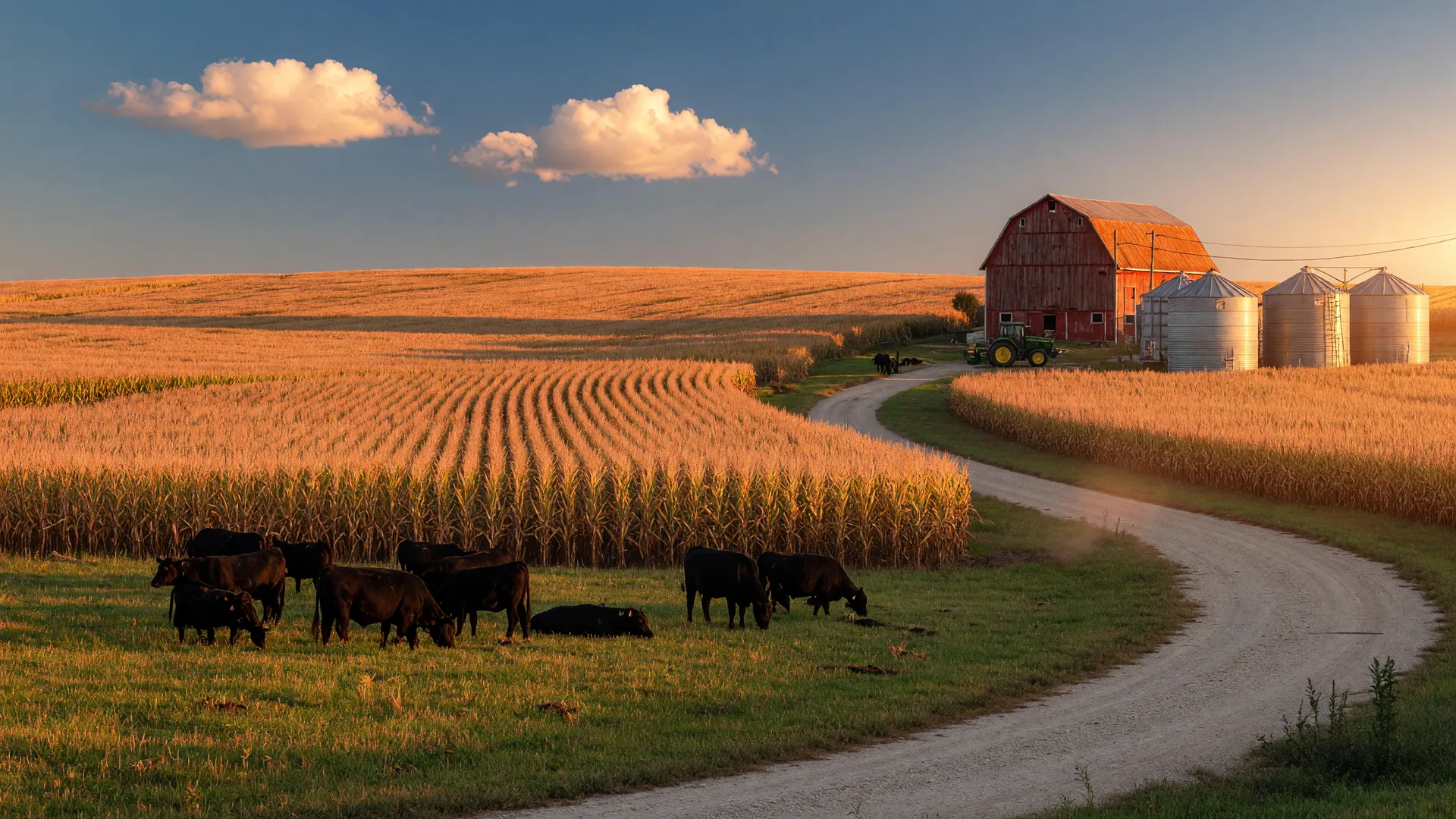
This is the Farm Gal Community Letter, the weekly newsletter for Wisconsin Land & Farm News. Every week I gather the FSA and NRCS deadlines, the cattle and crop market news, hunting and habitat notes, rural events, and the practical land knowledge that matter to people who own, farm, hunt, or sell rural ground across West Central Wisconsin. This week the calendar is packed: program deadlines close in, the 12th is the big hunting opener, and the regular goose season opens September 16.
I cover Eau Claire, Dunn, Trempealeau, Chippewa, Buffalo, Jackson, and Clark counties first, then the rest of Wisconsin. Plain talk, local names, and real dates. Here is the week.
FSA and NRCS Deadlines Closing In
NRCS EQIP applications for FY 2027 funding are due by September 18. The program cost-shares fencing, livestock water systems, cover crops, rotational grazing, and the brush and weed management this region actually uses. Wisconsin NRCS accepts applications year-round, but the September 18 batch gets scored for the next funding cycle. Get an application on file by then.
September 30 is the closing date for NAP coverage on fall-seeded and perennial crops: perennial grasses, alfalfa, clover, mixed forage, garlic, rhubarb, asparagus, strawberries, wheat, and wild rice. NAP is the safety net for crops without federal crop insurance, and the closing date sets coverage for the coming year. If you raise any of those, get the paperwork moving this week, not on the last day.
September 30 is also the acreage reporting deadline at your county Farm Service Agency office for value-loss and controlled-environment crops, and fall-seeded wheat and rye go on the September report. The office line gets long at month-end; beat it.
And while you are at it, bring up the drought. The Drought Monitor shows severe and extreme drought across parts of far western and northwestern Wisconsin, and UW-Madison Extension flags slipping topsoil moisture across the northwest, north-central, and central counties. The Livestock Forage Disaster Program offsets a share of feed costs in eligible counties, so for livestock producers one phone call settles whether you qualify and when to file.
Feeder Cattle Bounce Back
Markets were closed Monday, September 7 for Labor Day, and when trading reopened Tuesday, September 8, feeder cattle futures caught a real bid. The September feeder cattle contract settled at $328.87 per hundredweight, up $4.05, the October contract closed at $325.45, up $5.30, and the CME Feeder Cattle Cash Index, the cash benchmark for feeder sales, was $328.80, up 53 cents.
Cash trade agrees: auction reports around the same week had Medium and Large 1 steers in the 807 to 833 pound bracket trading in the $340 to $359.50 per hundredweight range, and some light calves drew rates that surprised the veterans. After the late-August pullback, that is a reassuring sign for cow-calf country as weaning nears.
The message I keep repeating: herd health, a preconditioning program, and set weaning dates turn the fall special feeder sales into top dollar. Line the feed bill and vaccine program up now; the premium shows up in October.
Corn and Beans Are Ahead of Average
As of late August, Wisconsin soybeans had set about 96 percent of their pods, ahead of normal, and corn and soybean development was running ahead of the five-year average. The USDA's Wisconsin crop progress report came out Monday, and soil moisture is the story to watch: the driest pockets, mostly northwest and central, have pasture men counting hay while the grass is still green.
Here in West Central Wisconsin, corn is denting and silage harvest is rolling out of the south and marching north, while soybeans are finishing pod fill and starting to color. In a dry finish, test weights and silage moisture are both worth watching, because the harvest window narrows fast. Sample moisture weekly before you chop. Moisture is a number you measure, not feel.
Hunting and Habitat: Saturday Is the Big One
Saturday, September 12, opens archery and crossbow deer season across Wisconsin, running through January 3, 2027, and the same day opens the fall turkey season statewide, also through January 3. Cottontail and ruffed grouse open in their zones the same day. Hang the stands, trim shooting lanes, and pull trail camera cards this week, while the leaves still let you see the country. Opening day is three days away.
The early teal season wrapped up September 9 and the early Canada goose season closes September 15. Then the regular Canada goose season opens September 16, the Youth Waterfowl Hunt lands September 19 and 20, and duck season opens September 26 in the Northern Zone and October 3 in the Southern.
If you own or lease hunting ground, this is one of the busiest weeks of the year on the land itself. Deer are working standing corn and the last clover, bedding in the thickest cover on the place. Read where feed and cover meet and you know where to sit opening weekend. And buyers, walk ground now: the leaves are not down yet, so you can still read the cover, the access, and the trails. You cannot buy good hunting land in the dark.
For the goose crowd, fields are filling. Wheat stubble has drawn birds all month, and as corn comes off the birds will shift with it. Scout what your permission covers, and be ready for the regular opener on the 16th.
Rural Community Events on the Calendar
Fair season is wrapping up around here. The Chippewa County Fair in Chippewa Falls ran off the Labor Day weekend, and most of our county fairs finished in July and August. The dates that matter now are outdoors: the Youth Waterfowl Hunt lands September 19 and 20, a weekend built for getting kids into a duck blind, and a farm and heavy equipment online auction out of Prairie Farm closes its bidding September 14. Auction houses move into full gear this month, so call your local sale barn.
If you are new to the country, the fastest education in these parts is showing up: a benefit shoot, a church harvest supper, or a sale day at a neighboring barn. September and October are full of them; most are listed nowhere but the co-op bulletin board. Ask at the grain elevator or the country store and you will be on three lists by Sunday.
Practical Land Knowledge: Read the Field Before the Snow
September through the first hard ground frost is the one stretch of the year when you can see the bones of a farm. With corn coming off, tile outlets, low spots, fence lines, water movement, and the true lay of the land get a full look for the first time since spring. That is the look you want before you buy, sell, or rent. The summer green flatters every field; September tells the truth.
If you own timber, the fall harvest window is opening and county foresters are booking up. Get a forester out to cruise the stand now, before the leaves drop, and ask about the Managed Forest Law program, which can ease the tax load on ten or more acres of woodland. I wrote a full guide on what your timber is worth if you are putting a number on your woods.
And a word to sellers: this is the last window before the ground turns. Buyers who walk property now are the serious ones, the buyers who sign in October and close before snow. If you have been sitting on a decision, the next three weeks are the ones that count.
That Is the Week Ahead
To recap: EQIP applications are due September 18, NAP and acreage reporting close September 30, feeder cattle rallied after the Labor Day break, the crop is ahead of average, archery and fall turkey open Saturday the 12th, and regular goose opens September 16.
If you know an event or a topic I should cover next week, send it my way. I am your Farm Gal Realtor, and I am in these communities every week. You can reach me at erica@ericalawton.com or call me at (715) 495-0456.
And if you are thinking about buying or selling rural property in Wisconsin, I would love to talk. Farm ground, hunting land, timber, ranch, recreational acreage, or a rural home: I help with all of it.