Eau Claire &
Western Wisconsin · Dunn County & Eau Claire County
A guide for buyers, sellers, and anyone curious about rural life in the Eau Claire and Menomonie area. I cover these communities and the surrounding farmland, hunting parcels, and acreage properties every day. This is what you need to know if you are thinking about buying or selling rural property here. If you want a conversation instead of a guide, call me anytime.
The Area at
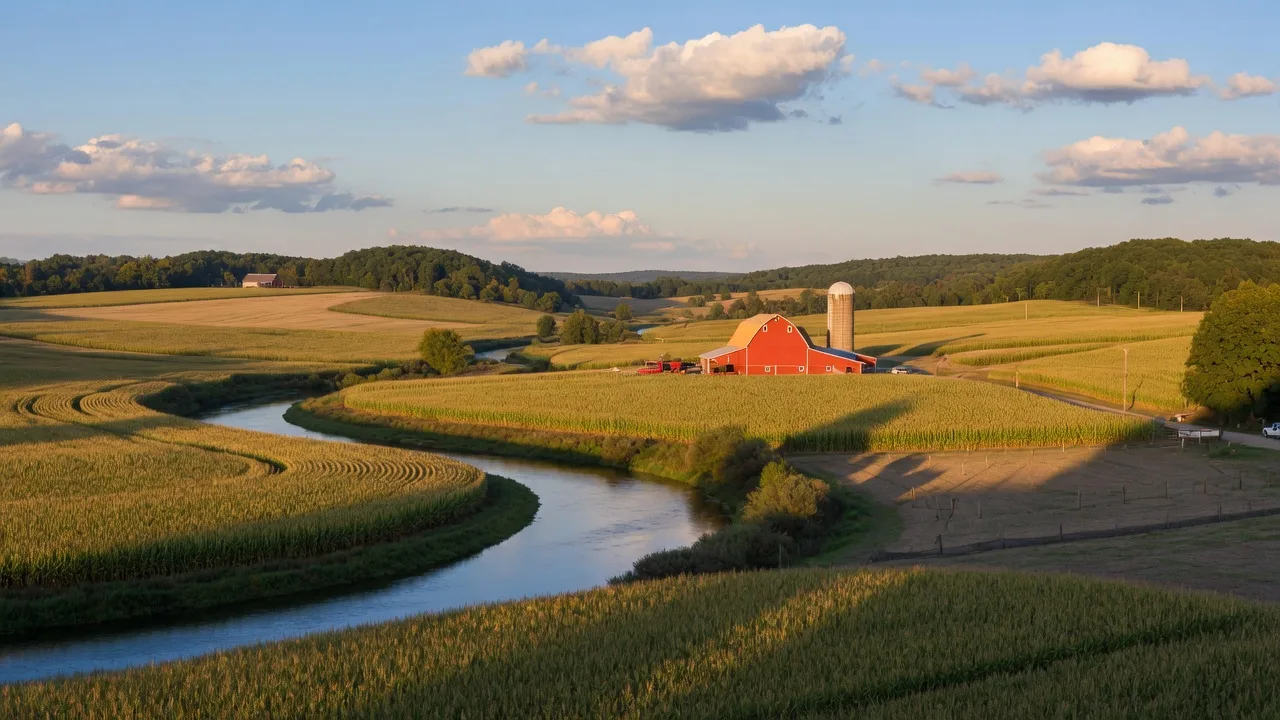
The Eau Claire and Menomonie area sits in the heart of western Wisconsin along the Chippewa and Red Cedar Rivers. Eau Claire County has a population of about 107,000 and growing, while Dunn County (home to Menomonie) runs around 45,000 with plenty of elbow room. Together, these two counties offer a mix of small-city amenities and wide-open rural landscape that is getting harder to find in the Midwest.
People are moving here from the Twin Cities metro, from Chicago, and from other parts of the country for the same reasons: affordable land, honest communities, and space to breathe. You can own 40 acres of tillable ground or 80 acres of hardwood timber within 90 minutes of Minneapolis-Saint Paul. You can raise cattle, plant crops, hunt whitetail, or just sit on your porch and watch the sunset over your own fields. That combination is rare, and it is why this market keeps growing.
Rural Living
Life in this corner of Wisconsin moves at a different pace. For farm and land owners, the day starts early and follows the season. Spring means calving and planting. Summer brings haying, fencing repairs, and county fairs. Fall is harvest, deer season, and the best time of year to be outside. Winter means ice fishing, snowmobiling, and catching up on indoor projects.
The agricultural community here is strong. You will find dairy operations passed down through generations, beef cattle operations like mine, row-crop farms growing corn and soybeans, and timber operations working the hardwood stands. This is also a growing area for farm-to-table culture. The Eau Claire Farmers Market on Grand Avenue is one of the best in the state, and the Menomonie Farmers Market draws serious crowds during growing season. Local co-ops like the Just Local Food Co-op in Eau Claire make it easy to buy direct from area producers.
Hunting & Fishing
Whitetail deer, turkey, small game, and waterfowl. The Chippewa and Red Cedar Rivers hold walleye, smallmouth bass, and catfish. Public hunting land is accessible in nearby county forests.
Hiking & Trails
The Red Cedar State Trail and Chippewa River State Trail offer miles of rail-trail through river bottomland, farmland, and forest.
Ag Community
Dairy, beef cattle, row crops, and timber. Strong 4-H and FFA programs. Dunn County Fair and Eau Claire County Fair are summer highlights.
Year-Round Recreation
Fall color along the river valleys, winter snow sports, spring maple syrup season, summer farmers markets and fairs. Every season has a reason to be outside.
Property Types &
The Eau Claire and Menomonie area offers more than just houses. Here is what you will find and what you can typically expect to pay. Every property is different, so these are ballpark ranges based on recent market activity.
Country Homes on Acreage
5 to 20 acres with a house, maybe a pole barn or small outbuilding. Popular with people moving from the metro who want space without running a full farm operation. Typical range: $300,000 to $600,000 depending on home condition, acreage, and location relative to Eau Claire.
Hobby Farms & Small Acreages
20 to 80 acres with a house, barns, fencing, and water. Good for small-scale livestock, hay production, or just having room to roam. Common in Dunn County and northern Eau Claire County. Typical range: $400,000 to $900,000.
Working Farms
80 acres and up with tillable ground, outbuildings, grain storage or dairy infrastructure. These are operational properties that generate income. Prices vary heavily by soil quality, buildings, and location. Expect $800,000 to $2,500,000+ for a viable farm operation.
Hunting Land & Recreational Parcels
40 to 200 acres of mixed timber, brush, and water. Price is driven by habitat quality, deer density, timber value, and access. Good hunting parcels in this area range from $3,000 to $7,000 per acre depending on location and cover quality. See our Hunting Land page for more detail on what buyers look for.
Timberland & Conservation Parcels
Wooded acreage with mature hardwood stands (oak, maple, hickory). Timber value depends on board feet, species mix, and access for logging. Managed forest tax credits may apply. Timber ground typically runs $2,500 to $5,000 per acre, with premium for high-quality sawtimber. Read our Timber Value Guide to learn more.
Local Businesses
Living rural means knowing where to get what you need. The Eau Claire and Menomonie area supports the kind of local businesses that keep an ag community running. Here is what is here, and what I recommend to my clients.
Farm Supply & Equipment
Tractor Supply Co., Runnings, and local implement dealers serve the area. For larger ag equipment and parts, there are multiple Case IH and John Deere dealers in the region.
Farmers Markets & Co-ops
Eau Claire Downtown Farmers Market, Menomonie Farmers Market, Just Local Food Co-op in Eau Claire, and the Menomonie Market Food Co-op. Farm-to-table culture runs deep here.
Ag Lending & Banking
Local community banks that understand ag lending include Oakwood Bank, Abby Bank, and Alliance Bank. Compeer Financial is also an excellent ag lending option in this region. Do not use a national lender for rural property. Use someone who understands land.
Veterinary & Livestock Services
The area offers many options for small animal veterinarians as well as large animal vet practices serving both counties. Whether you need routine care for a family pet or livestock services for your farm operation, you will find qualified professionals close by.
Supporting local means you keep the community strong. Whether you need fence supplies, a mechanic who works on tractors, or a lender who understands rotational grazing, the businesses here know what they are doing because they live it too.
Parks, Trails &
One of the biggest reasons people move to this area is the access to outdoor recreation. Here is the short list of places every rural property buyer should know about.
Carson Park (Eau Claire)
A 134-acre peninsula park on Half Moon Lake. Baseball stadium, walking trails, and the Chippewa Valley Museum. Great for family outings.
Phoenix Park (Eau Claire)
Right on the Eau Claire River with a large pavilion, skate park, and regular concerts in the warmer months. One of the best riverfront parks in the region.
Red Cedar State Trail
14.5 miles of rail-trail from Menomonie to Dunnville, following the Red Cedar River. Excellent for hiking, biking, and birding. Connects to the Chippewa River State Trail.
Chippewa River State Trail
30-mile trail from Eau Claire to Durand along the Chippewa River through farmland and river bottomland. One of the best long-distance trails in western Wisconsin.
Tower Ridge County Park
400+ acres in Dunn County with hiking trails, picnic areas, and panoramic views of the Red Cedar River valley. A hidden gem for local outdoor enthusiasts.
Dunnville Bottoms
A floodplain wildlife area at the confluence of the Red Cedar and Chippewa Rivers. Popular for birdwatching, hiking, and hunting waterfowl. Public access available.
For hunting and fishing access, the Red Cedar River and Chippewa River both offer public boat launches and shore fishing spots. The surrounding county forests in Dunn, Eau Claire, and Chippewa counties provide public hunting ground for deer, turkey, and small game. If you are buying land for hunting access, I recommend reading my guide to reading access and terrain on hunting land.
Schools &
For families moving to rural property, schools matter. Here is the education landscape in the Eau Claire and Menomonie area.
Eau Claire Area School District
Serves the city of Eau Claire and surrounding townships. Multiple elementary schools, two middle schools, and three high schools including North High and Memorial High. Known for strong academic programs, music and arts, and vocational agriculture offerings through the Chippewa Valley Technical College partnership.
Menomonie Area School District
Serves Menomonie and the surrounding Dunn County townships. Menomonie High School has a strong FFA chapter and ag education program. The district is smaller and more rural, with elementary schools in the outlying communities for families living farther out.
UW-Eau Claire
A top public liberal arts university in Wisconsin. Known for nursing, business, and education programs. Brings a young, energetic population to the area.
UW-Stout (Menomonie)
A polytechnic university in Menomonie specializing in engineering, technology, and applied sciences. Strong programs in construction management and packaging. Part of the UW System.
CVTC
Chippewa Valley Technical College has campuses in Eau Claire and Menomonie. Offers agribusiness, dairy science, diesel technology, and farm business production programs.
4-H & FFA
Both Dunn County and Eau Claire County have active 4-H programs with strong livestock, shooting sports, and agricultural science projects. Menomonie High School FFA and the local Dunn County FFA chapters are well-supported. For families moving to the area with kids who grew up on a farm or want to, this is a big deal. These programs keep the next generation connected to agriculture.
Frequently Asked
Buyer
What should out-of-state buyers know before purchasing land here?
First, congratulations on choosing this area. A lot of my buyers come from Illinois, Minnesota, and California. Here is what I tell them: the process is straightforward, but do not skip the boots-on-the-ground work. I do video tours and detailed walkthroughs for remote buyers, but you should see the property in person before closing if you can. Know your use case. Are you buying for hunting, farming, timber, or just a weekend retreat? That changes what you should look for. Work with local inspectors who understand rural property. And make sure your financing is lined up with a lender who understands rural land. Not every bank does. Read my guide on moving to rural Wisconsin for more.
What do I need to know about well, septic, and rural utilities?
These are the three most common surprises for new rural property owners. Test the well water for bacteria, nitrates, and hardness before you commit. Most wells here are fine, but you need to know. Have the septic system pumped and inspected. County health departments require compliance for any system serving a dwelling. Check internet availability if you work remotely. Starlink works well in the area, but fiber is still expanding. For electric, most rural properties already have service to the buildings. If you are buying raw land to build on, get a cost estimate from the utility company early.
How do I evaluate hunting vs. farming vs. recreational land?
Start with your primary goal. For hunting land, you care about habitat, cover, water sources, timber species, and proximity to public land. Walk the property during the season you plan to hunt. For farming, you care about soil class, drainage, field size, access for equipment, and existing infrastructure. Pull the NRCS soil survey and talk to a local farmer about the land. For recreational use, look at access, privacy, views, and what you want to do. Timber adds another layer. I wrote a guide on evaluating pasture, tillable, timber, and recreational ground that walks through each type.
Seller
When is the best time to list rural property in this area?
Late spring through early fall is the strongest window. April through October catches the best weather for showings and gives buyers time to evaluate the property before winter. That said, I have sold properties in every month of the year. Hunting land sellers often do well listing in late summer to catch the pre-season buyer rush. Farmland with crops can be shown during growing season, but serious buyers understand what they are looking at regardless. The best time to list is when your property is ready. I have written more about timing in my fall listing guide and seller prep guide.
How do I prepare my farm or land for sale?
Clean up what you can. Mow fence lines and field edges. Repair broken gates. Make sure access is clear. If you have buildings, clean them out and check for roof leaks. Have your well water tested and your septic inspected before a buyer asks. Pull your tax records, soil maps, and any surveys or easement documents. Get a timber cruise if you have significant woodland value. And take good photos. Rural property needs different photography than a suburban house. I handle all of that when we work together, but getting your paperwork in order ahead of time speeds everything up. See my full Sell With The Farm Gal page.
What adds value to rural acreage?
Good access and legal easements. Functional fencing that is in good repair. A tested well and compliant septic. Clean buildings with sound roofs. Established pastures with water access for livestock. Quality hardwood timber that has been managed. A history of tillable income. And good boundaries. Buyers pay more when they can clearly see what they are getting. Surveyed, marked property lines are worth the investment before listing. If the property has hunting value, documented trail camera photos and habitat improvements help. I talk through all of these with every seller before we go to market.
Let's Talk About
Whether you are buying, selling, or just curious about the market in the Eau Claire and Menomonie area, I would love to hear from you. I am your Farm Gal Realtor, and I know this land.
Erica Lawton · Salesperson · WI license 82579-94 · Epique Realty · Serving Eau Claire County, Dunn County, and all of Wisconsin.