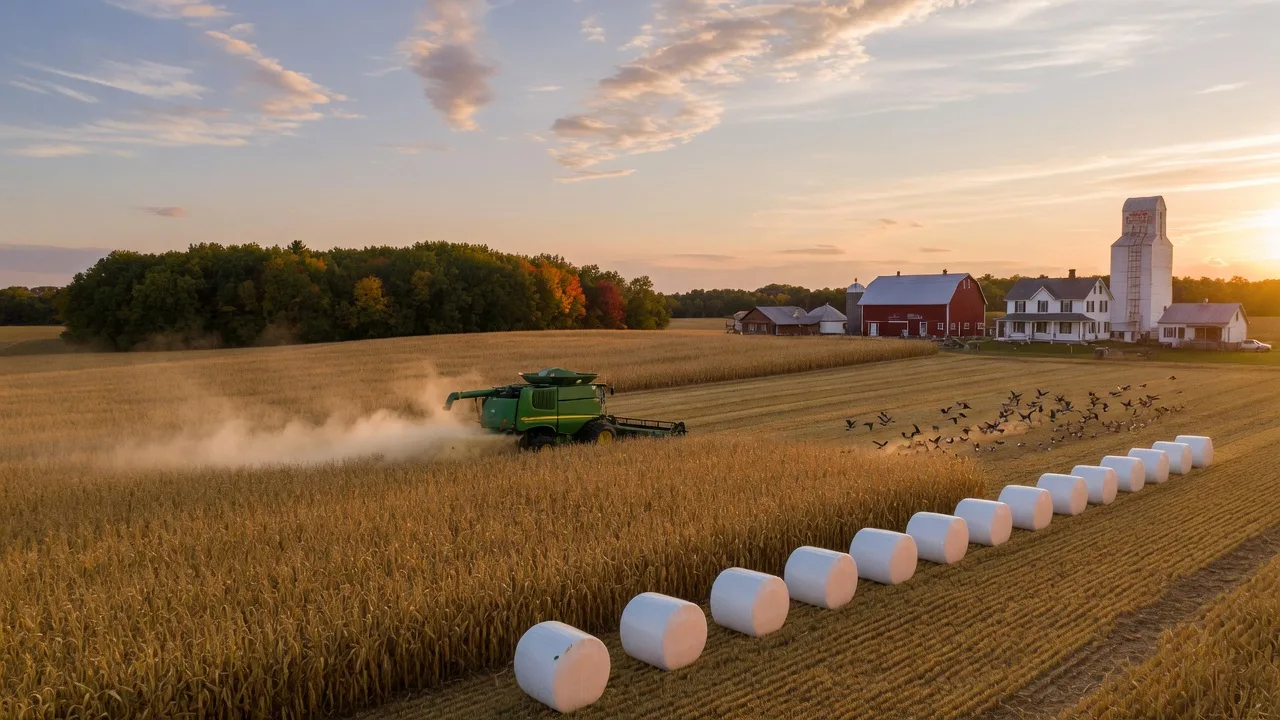
This is the Farm Gal Community Letter, the weekly newsletter for Wisconsin Land & Farm News. Every week I round up the FSA and NRCS deadlines, the cattle and crop markets, hunting and habitat notes, rural events, and practical land knowledge for people who own, farm, hunt, or sell rural ground across West Central Wisconsin. This week the calendar is doing what it always does in late September: a big farm-program deadline closes in seven days, the duck opener lands Saturday, and Trempealeau County is partying.
I cover Eau Claire, Dunn, Trempealeau, Chippewa, Buffalo, Jackson, and Clark counties first, then the rest of Wisconsin. Plain talk, local names, and real dates. Here is the week.
FSA and NRCS: The September 30 Deadline Is the Big One
The headline for producers is SDRP, the Supplemental Disaster Relief Program. Signup for disaster losses in the 2023, 2024, and 2025 crop years closes at close of business Wednesday, September 30, at your county FSA office, and USDA already moved it once, so do not count on another extension. Stage 1 covers losses already paid under federal crop insurance or NAP, and most applications came pre-filled on the FSA-526 form. Stage 2 covers the uncovered and shallow losses on top, the deductibles and the uninsured crops.
The drought math matters for these parts: to qualify, your county needs an eight-week stretch of D2 severe drought or a D3 or D4 rating at the right time, and Wisconsin had a long list of counties meet that bar in 2023, including Chippewa, Dunn, Jackson, La Crosse, Monroe, and Wood. If you grew a crop in any of those three years and took a loss, one call settles whether you should file. Do not guess your way past a payment that is sitting there.
The same September 30 date closes the usual crop-year business: acreage reporting and the NAP sales closing date for value-loss and controlled-environment crops like Christmas trees, ginseng, garlic, wild rice, forage, and fall-seeded small grains. CRP operators get this reminder twice a year; this is the fall one: contract-management grazing comes off by September 30, and the Farm Bill authorization that keeps CRP on the books runs through the same day.
And for anyone running a drill this fall: the fall-seeded acreage report is due November 15, but file it within 15 days of planting once seeding is done.
Cattle: A Record-Low Placement Month Got the Board's Attention
As of September 1, the nation had 11.163 million head on feed, up 0.7 percent from a year ago, but the headline from Friday's Cattle on Feed report was August placements: 1.617 million head, down 9 percent, the lowest August total for the month since 1996. Fewer calves on feed now means tighter beef supplies down the road, and the market read it exactly that way: Monday, October live cattle settled at $220.95, up $5.02, and October feeder cattle closed at $330.25, up $6.75.
Cash has been slower to shake loose, normal for this week. Direct fed trade was mostly undeveloped early in the week, and the prior round in the big feeding regions ran about $222 to $223 live and right around $350 dressed. At the fall specials, the lighter end is drawing the money: feeder steers under 600 pounds ran $10 to $25 higher at one regional market, with the heavier weights mostly steady.
For cow-calf country, weaning is here, the fall specials are filling the calendar, and the calves with a full preconditioning program still earn the premium. More in this week's market update.
Corn and Beans: Harvest Is Really Rolling Now
The USDA crop progress report for the week ending September 20 has corn harvest at 13 percent and soybeans at 12 percent nationally, both ahead of the five-year averages. Wisconsin is moving too: as of mid-September the state had about a third of its corn silage in the bunk, 61 percent of corn rated good to excellent, and 27 percent of soybeans dropping leaves, ahead of normal.
The board cooled off Tuesday after Monday's rally. December corn settled at $5.36 3/4, down 6 1/4 cents, and November soybeans closed at $13.25 1/2, down 2 1/2 cents. Cash is still a call-ahead market: one big Wisconsin co-op is posting #2 corn from about $4.22 to $5.15 and #2 soybeans from about $11.67 to $12.27 by location and delivery month, so the basis is worth a phone call before you price a load.
The drought picture is shifting with the harvest: the Drought Monitor update valid September 22 shows heavy rain moved across central Wisconsin, easing dry conditions there while the north keeps drying. Watch it for surface moisture at harvest, and for the next Livestock Forage Disaster Program window if you are on dry pasture.
Hunting and Habitat: Duck Opener Is Saturday
Saturday, September 26 is the one that matters for waterfowlers in these parts: the Northern Zone duck season opens and runs through November 24. The daily bag is six ducks, with no more than four mallards and just two of them hens, so know your birds before you call shooters.
The regular Canada goose season is running in the Northern and Southern Zones, and the Mississippi River Zone opens October 3. Ruffed grouse have been open in Zone A since September 12 and woodcock since September 19, and archery and crossbow deer and fall turkey have run since September 12, both through January 3, 2027.
The Youth Waterfowl Hunt came and went last weekend, September 19 and 20, and the reports I heard were good ones: kids in the blinds, birds in the bag. With the combines running, the ducks and geese are where fresh-cut fields meet standing cover. If you are scouting for Saturday, look for pockets of water next to recently cut corn and beans.
Rural Community Events: Trempealeau County Is Packed
Blair Cheese Festival runs Thursday through Sunday, September 24 to 27, in Trempealeau County, with a carnival and parade, and the kind of small-town weekend that empties every neighbor's calendar. Saturday, September 26 adds Fall Farm Days in Whitehall starting at 9 a.m. at N38116 US Highway 53, and the Hill & Valley Fall Exploration Tour opens its second weekend September 26 and 27, the back roads around Whitehall worth the drive even before the leaves hit full color.
Ecker's Apple Farm in Trempealeau is at peak pick-your-own, with weekend music and food-truck events through October. And a head's up for next Saturday: the 43rd Galesville Apple Affair is October 3 at the Trempealeau County Fairgrounds, 8 a.m. to 4 p.m., home of the ten-foot apple pie. If you are new to the country, this is the weekend to show up: three days of events inside an hour of home, and every one is a lesson in how these communities work.
Practical Land Knowledge: Walk It While the Fields Are Open
The combines are opening the ground right now, and that is the best thing that happens to a farm buyer all year. The tile outlets, the low spots, the water movement, the fence lines, and the true lay of the land all get a full look for the first time since spring. The summer green flatters every field; September reports. If you are buying, selling, or renting ground, get on it in the next two weeks. More on what to check on a harvest-season land walk.
Timber owners get the same note as last week, because it does not stop being true: the fall harvest window is opening, county foresters are booking up, and a cruise now, while the leaves still tell you what is growing where, beats one in November. Ask about the Managed Forest Law program while you have the forester on the phone.
And to sellers: the buyers walking ground in late September are the serious ones, the people who sign before Thanksgiving and close before the ground freezes. I have written before about what makes hunting land sell, and the same rule holds for every rural property: the story the land tells in September, with the fields open and the water running, is the one that moves buyers.
That Is the Week Ahead
To recap: SDRP disaster signup, acreage reporting, and NAP close September 30, CRP grazing comes off the same day, the duck opener is Saturday, and the combines are rolling.
If you know an event or a topic I should cover, send it my way. I am your Farm Gal Realtor and I am in these communities every week: reach me at erica@ericalawton.com or (715) 495-0456.
And if you are thinking about buying or selling rural property in Wisconsin, I would love to talk about farm ground, hunting land, timber, ranch, recreational acreage, or a rural home.